
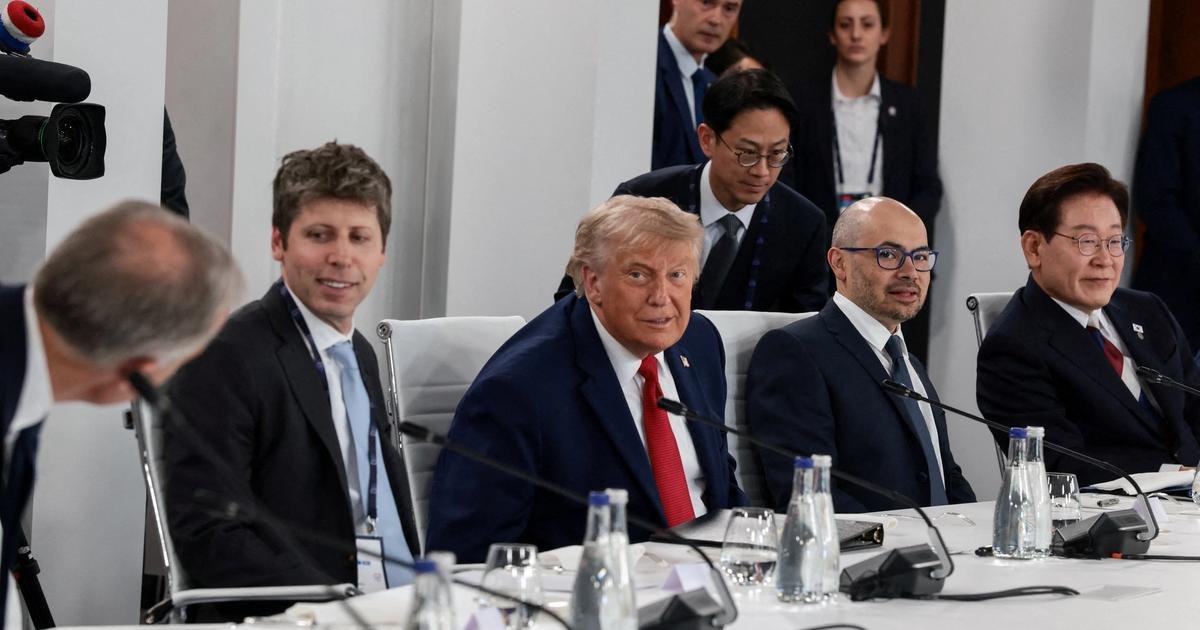
The United States is using its G20 presidency to argue that artificial-intelligence rules should encourage deployment and investment instead of creating a new layer of prescriptive controls.
Washington’s message in Chapel Hill
The G20 Innovation Ministerial brought officials and technology executives to North Carolina for talks on AI, trade and emerging technology. U.S. officials framed regulatory fragmentation as a threat to adoption, particularly when companies must satisfy conflicting national requirements.
A contest over regulatory philosophy
The American position favors flexible standards, sector-specific enforcement and voluntary cooperation. European governments have generally placed more weight on mandatory risk controls, documentation and transparency. Developing economies are also asking whether governance systems will widen or narrow access to computing power.
Industry has a seat at the table
OpenAI chief Sam Altman and Nvidia chief Jensen Huang were among the technology leaders involved in the broader ministerial program. Their presence reflects the unusual degree to which private companies control the infrastructure, models and technical expertise behind the policy debate.
What an agreement could actually do
A G20 statement would not replace national law. It could, however, shape common terminology, technical standards and cross-border expectations. The practical test is whether countries can make their systems interoperable while preserving different views on safety and accountability.
What “light touch” means in practice
The phrase does not necessarily mean an absence of law. It usually points to enforcing existing consumer, competition and civil-rights statutes while reserving new AI-specific obligations for clearly defined high-risk uses.
Supporters say this keeps rules adaptable as models change. Critics answer that general statutes were not designed to address model evaluation, training-data disclosure or automated decisions at scale.
The fragmentation problem
A company operating internationally can face different definitions of high-risk AI, different reporting deadlines and different technical documentation requirements. Compliance costs rise when the same system must be tested and packaged repeatedly.
Interoperable standards could allow one credible evaluation to satisfy several markets. The difficult question is whose test counts and which regulator accepts another country’s judgment.
Why chips and power belong in the talks
AI policy is inseparable from access to accelerators, data centers and electricity. Countries without infrastructure worry that rules written by model-producing nations will preserve an unequal market.
The United States can offer investment and technology partnerships, but export controls and security restrictions pull in the other direction. G20 members will judge the strategy by how it balances access with national-security limits.
The safety argument from allies
Governments favoring stronger rules point to deepfakes, discrimination, cyber misuse and opaque automated decisions. They argue that voluntary promises are weakest precisely when commercial pressure is strongest.
The American response is that premature rules can freeze today’s technical assumptions into law and protect incumbent companies able to afford compliance. Both concerns can be true at the same time.
What business wants from the G20
Companies want predictable definitions, recognized testing methods and fewer conflicting localization demands. They also want rules that distinguish developers of general models from organizations deploying them in health, finance or employment.
Civil-society groups seek equally clear rights for people affected by automated decisions. A durable framework must specify how complaints, explanations and remedies work—not only how firms document compliance.
The likely outcome
Ministerial meetings usually produce principles and work programs rather than binding legislation. Progress may appear in technical cooperation, shared vocabulary and commitments to continue negotiations.
The absence of a global AI law does not make the talks symbolic. Standards adopted now can influence procurement, investment and later national rules.
Sources and verification
This report was prepared from current material available on September 2, 2026. Developing facts may change, and allegations are identified as allegations.
Editorial standard
Chitran Newsroom separates confirmed facts, contextual analysis and forward-looking interpretation. Corrections are made transparently when credible new evidence changes the record.