
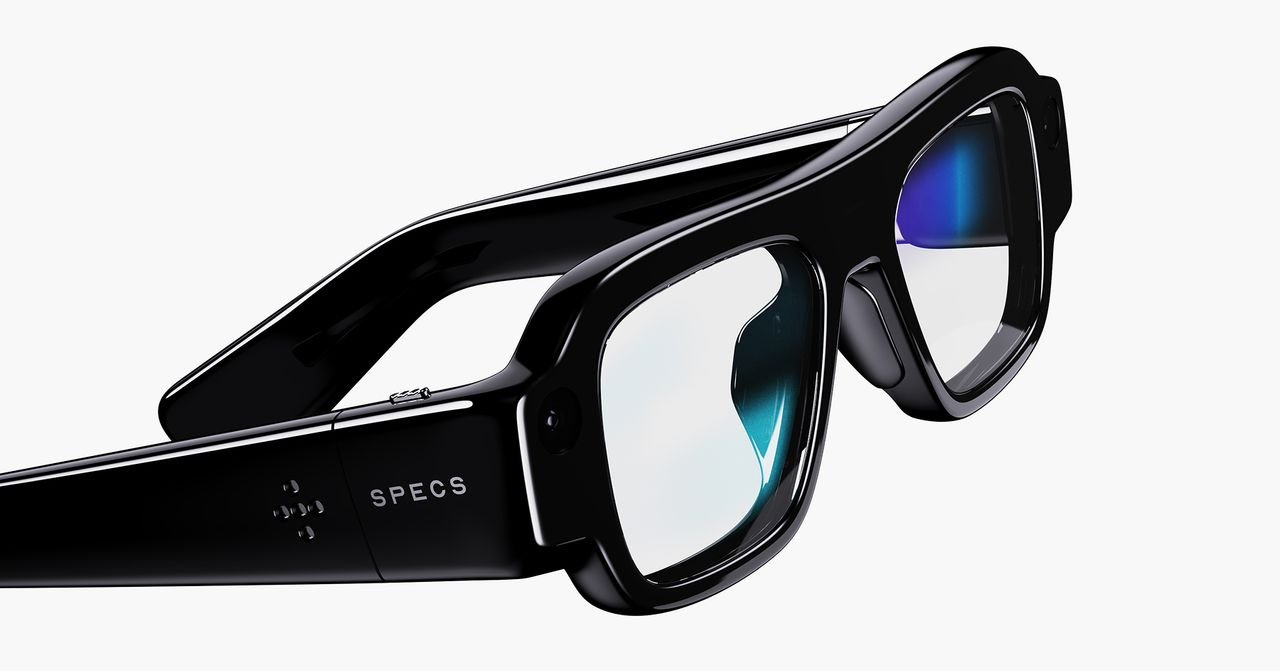
Snap is asking consumers to pay laptop-level money for augmented-reality glasses that attempt something mainstream smart eyewear still cannot: place interactive digital objects into the wearer’s view.
What the ,195 buys
Specs use transparent displays, cameras and spatial tracking to anchor digital content in the physical world. That separates them from camera-and-audio glasses that capture video or answer voice questions without projecting a full visual layer.
A developer bet becomes a consumer test
Snap has spent years distributing earlier Spectacles to creators and developers. The consumer release moves the project from controlled experiments into a market where comfort, battery life, prescription support and everyday usefulness matter as much as technical novelty.
Why the price is so high
Waveguide displays, compact sensors and custom optics remain expensive to manufacture. Snap is effectively targeting developers and early adopters rather than the mass market, hoping they will create experiences that justify cheaper later generations.
The question Snap must answer
The company needs a use case stronger than novelty. Navigation, shared games, contextual AI and hands-free creation are promising, but a wearable succeeds only if people are comfortable using it in public for long periods.
How the display differs from a phone
Augmented-reality optics must deliver an image the eye can focus on while preserving a clear view of the world. Brightness, field of view and alignment determine whether graphics feel anchored or float awkwardly.
That optical challenge explains why true AR glasses remain thicker and more expensive than ordinary eyewear. Miniaturization cannot come at the cost of heat, comfort or visual safety.
Battery life is the quiet constraint
Cameras, displays, wireless radios and on-device processing all consume power. A device that works impressively for a demonstration may be less useful if it cannot last through a commute or social event.
Charging cases and tethered modes can extend use, but they reduce the effortless quality consumers expect from glasses. Real-world reviews should test mixed use, not only the manufacturer’s best-case figure.
Privacy in a camera-first wearable
People nearby need to understand when recording or sensing is active. Small indicators, unfamiliar hardware and AI analysis can make consent harder than it is with a phone held visibly in front of someone.
Snap’s policies and hardware signals will matter in workplaces, schools and private venues. Social acceptance can limit a wearable even when the technology performs well.
The developer ecosystem
AR glasses become more valuable when outside developers build navigation, entertainment, education and productivity experiences. Snap needs tools that let creators prototype quickly without sacrificing performance.
Developers will compare the potential audience with the cost of supporting another platform. High hardware pricing can slow that flywheel by limiting the number of users available to buy new experiences.
Competitors define the benchmark
Meta has established demand for camera glasses, while Apple, Google and specialized manufacturers are exploring different levels of display capability. Snap’s advantage is its history in lenses, social creation and youth culture.
Its disadvantage is scale. Larger rivals can subsidize hardware, integrate operating systems and negotiate broader component supply.
Who should consider buying
Developers, AR researchers and committed early adopters are the clearest audience. Most consumers should wait for independent testing of comfort, prescription options, durability and useful applications.
The
Sources and verification
This report was prepared from current material available on September 2, 2026. Developing facts may change, and allegations are identified as allegations.
Editorial standard
Chitran Newsroom separates confirmed facts, contextual analysis and forward-looking interpretation. Corrections are made transparently when credible new evidence changes the record.