
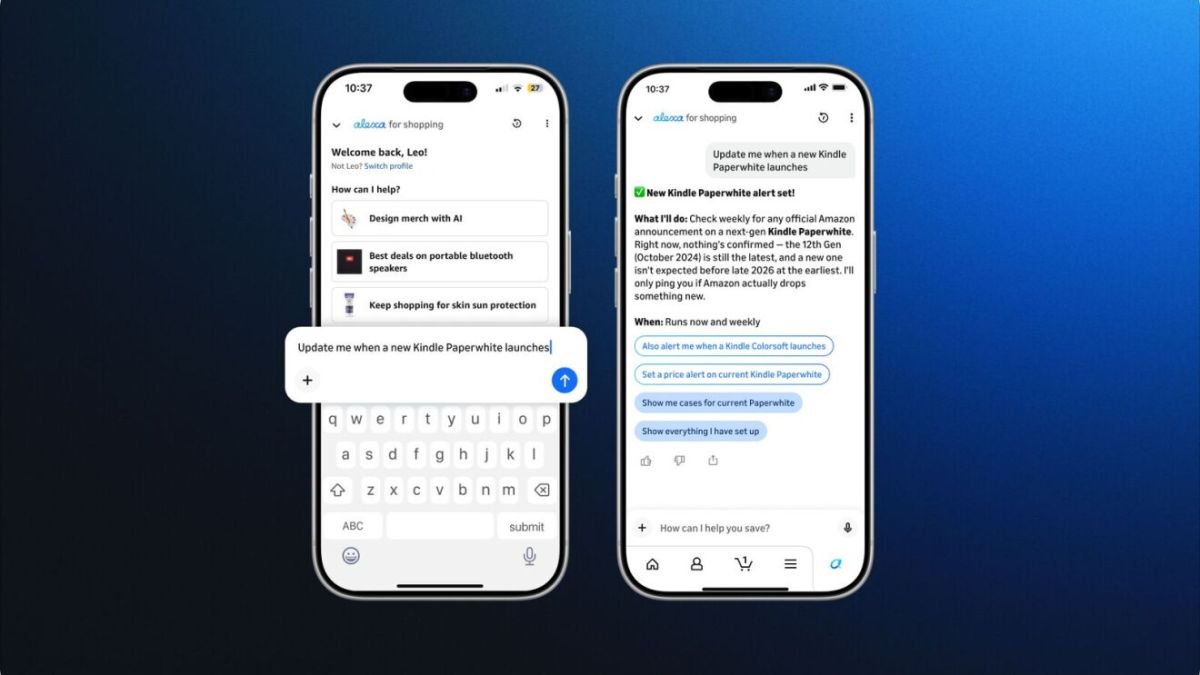
Amazon’s “Update Me When” feature turns Alexa for Shopping from a tool that answers purchase questions into one that can create the next shopping occasion.
A prompt for the future
Users can ask for an alert when a product launches, an event occurs or another specified condition creates a reason to shop. The request remains active instead of ending with the current conversation.
From Rufus to Alexa for Shopping
Amazon renamed its Rufus shopping assistant in May and has been combining comparison, personalization and agentic purchasing features under the Alexa brand. Proactive alerts extend that system to the top of the retail funnel.
Useful reminder or commercial nudge?
The same feature that helps a shopper track a release can also increase impulse purchases. The quality of controls—frequency, relevance and easy cancellation—will determine whether alerts feel helpful or intrusive.
Why sellers should pay attention
Product data must be clear enough for an assistant to understand availability, compatibility and use cases. As AI mediates discovery, structured catalog information may matter as much as traditional search placement.
Examples of a useful alert
A shopper might request notice when a camera model launches, when registration opens for an event or when a seasonal product returns. The value comes from monitoring a condition the user would otherwise check repeatedly.
Alerts should explain why they fired and provide the original request, preventing a vague notification from becoming an unexplained advertisement.
How proactive AI differs from search
Traditional search waits for intent. A persistent assistant stores intent and acts later, which requires memory, scheduling and judgment about relevance.
That shift can save effort, but it also gives the platform more opportunities to influence timing and product choice.
The data behind personalization
Amazon can combine explicit requests with shopping history, lists and product-catalog data. Users will want control over which signals shape an alert.
A gift search or one-time purchase should not necessarily become a long-term preference. Easy deletion and transparent settings are central to trust.
Notification fatigue
Even accurate alerts lose value when they arrive too frequently. The system should consolidate updates, respect quiet hours and let users choose whether price, availability or release news is important.
Commercial incentives favor more engagement, while user satisfaction often favors fewer interruptions. Product design has to manage that conflict.
The seller’s new audience is an agent
Product titles, compatibility details, release dates and stock status must be machine-readable and consistent. Ambiguous catalogs make it harder for Alexa to match an item to a stored request.
Sellers should not attempt to game assistants with unsupported claims; inaccurate structured data can create returns and enforcement risk.
Consumer safeguards
Before any automatic purchase, the assistant should show price, seller, delivery date and return terms and require the level of confirmation selected by the user.
Alerts are lower risk than auto-buying, but they are part of the same progression toward agent-mediated commerce.
Sources and verification
This report was prepared from current material available on September 2, 2026. Developing facts may change, and allegations are identified as allegations.
Editorial standard
Chitran Newsroom separates confirmed facts, contextual analysis and forward-looking interpretation. Corrections are made transparently when credible new evidence changes the record.