
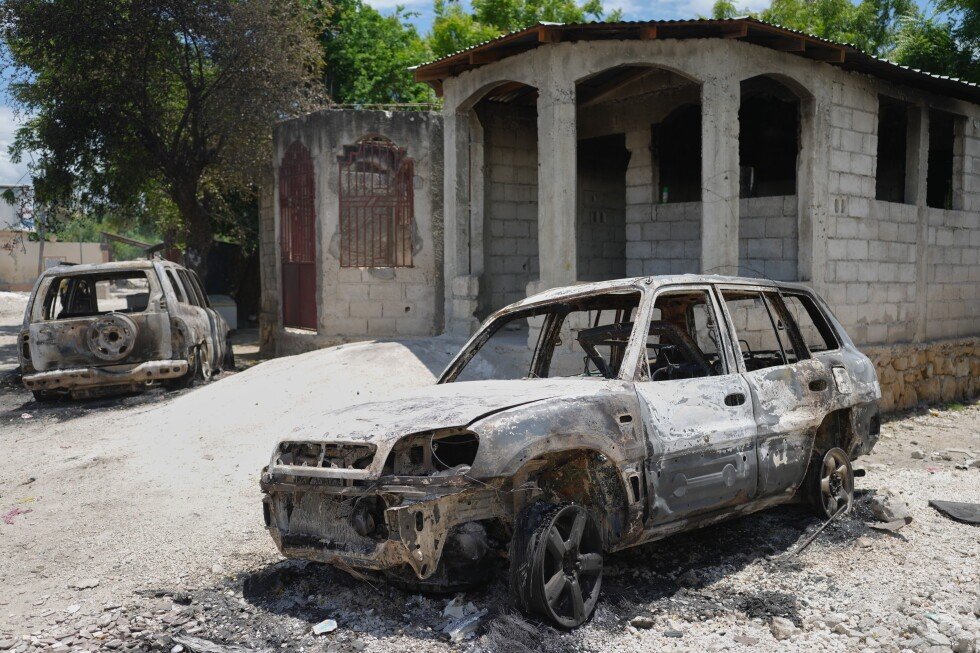
The U.N. says elections, security and humanitarian action must reinforce one another as Haiti confronts gang power, displacement and a long democratic vacuum.
The development
The United Nations’ senior official in Haiti told the Security Council that security, political engagement and humanitarian action must reinforce one another if the country is to move toward credible elections. The formulation matters because elections cannot repair state authority by themselves. Voters need to register, campaign workers need to travel, polling materials need to move and results need to be accepted in communities where armed groups exert control.
Why it matters now
Haiti has not held national elections for more than a decade, and it has lacked an elected president since Jovenel Moïse was assassinated in 2021. That democratic vacuum weakens accountability and makes every transitional arrangement vulnerable to questions of legitimacy. At the same time, delaying indefinitely until perfect security exists would give violent actors an effective veto over constitutional government.
The essential context
Gang power is economic as well as territorial. Armed groups use extortion, kidnapping, transport routes and increasingly online visibility to raise money and influence communities. U.S. officials have pledged to target gangs that monetize social media, but enforcement requires evidence, cooperation from platforms and safeguards so measures do not simply remove documentation useful to investigators.
How the mechanism works
An electoral calendar is only a starting point. Authorities need accurate voter lists, trained staff, secure storage, accessible polling locations and transparent dispute resolution. Displaced people present a particular challenge because their legal registration may be tied to neighborhoods they can no longer safely enter. Women, journalists and civil-society organizers also face targeted threats that can narrow genuine political competition.
The pressure points
International security assistance must earn public trust. Foreign missions in Haiti carry a history that includes failures and abuse allegations, so vetting, human-rights monitoring and accountability cannot be treated as obstacles to speed. A force that suppresses gangs while harming civilians would weaken the state it is meant to support and provide armed groups with propaganda.
What comes next
Progress should be measured through more than an election date. Watch voter registration, reopened roads and schools, functioning courts, humanitarian access, police retention and independent monitoring. Political actors must agree in advance on rules for results and complaints. Haiti needs a vote, but the deeper objective is a government capable of protecting citizens and being peacefully replaced through institutions rather than force.
What is confirmed — and what is not
The central facts above are tied to the dated source linked in this report. Fast-moving stories often mix official statements, preliminary figures and interpretation. Readers should separate a confirmed action from a proposal, an allegation from a finding, and a target from a completed outcome. Later filings, court orders, operational data or independent investigations may revise details without making the original development unimportant.
Why the story is spreading
This story combines a recognizable institution or public figure with consequences that can be understood quickly: power changes hands, prices move, records fall or safety rules are tested. That makes it highly shareable. Popularity, however, is not verification. The most useful coverage explains the mechanism connecting the headline to people’s lives and identifies the evidence that could confirm or weaken the first interpretation.
The incentives behind the announcement
Public officials, companies, campaigners and litigants communicate strategically. They emphasize facts that support their objectives, select favorable comparisons and may leave implementation details for later. That does not make every statement false; it means readers should ask who benefits, who bears the cost, what alternatives were available and which institution can independently check performance.
How to read the numbers
Large percentages and totals require a baseline. A record can reflect a larger market, more matches, inflation, changed definitions or a genuinely exceptional result. The responsible comparison uses the same period and unit, distinguishes stock from flow, and notes whether the figure is audited, estimated or provisional. Where data remain incomplete, direction can be clearer than precision.
Who is most exposed
The burden is rarely distributed evenly. Workers with specialized jobs, households with little financial flexibility, smaller suppliers, displaced communities and countries dependent on one route or platform have fewer alternatives. Decision-makers may describe an aggregate benefit while concentrated groups absorb immediate losses. Distribution is therefore part of the result, not a secondary political argument.
What could change next
A court ruling, ceasefire, technical anomaly, exemption, budget decision or customer response could quickly alter the trajectory. Scenario thinking is more honest than a single confident forecast. The favorable case requires implementation and cooperation; the adverse case combines delay with rising costs; the middle case often produces partial delivery and continued uncertainty.
A practical verification checklist
Follow the primary source, then compare it with independent reporting and the next measurable release. Check dates, definitions, geographic scope and whether images or video show the event claimed. For legal allegations, preserve the presumption of innocence. For conflict claims, seek multiple independent confirmations. For corporate or scientific claims, look for technical documentation and reproducible results.
What Chitran Newsroom will watch
This report will merit revision if authorities change the policy, new evidence contradicts an important fact, or the promised outcome becomes measurable. The newsroom’s focus is not to preserve the drama of the first headline but to track delivery, consequences and corrections. Readers should use the cited source for the original record and return to later official releases for the current status.
Sources and further reading
This report is grounded in the primary or directly cited news record. Because this is a developing story, readers should consult the original source for later revisions and supporting detail.
Editorial independence
About this reportReporting on politics, public policy, climate and the economy is produced as independent newsroom coverage and is not connected with the educational services or teaching operations of Chitran International Online Art Classes, LLC.