
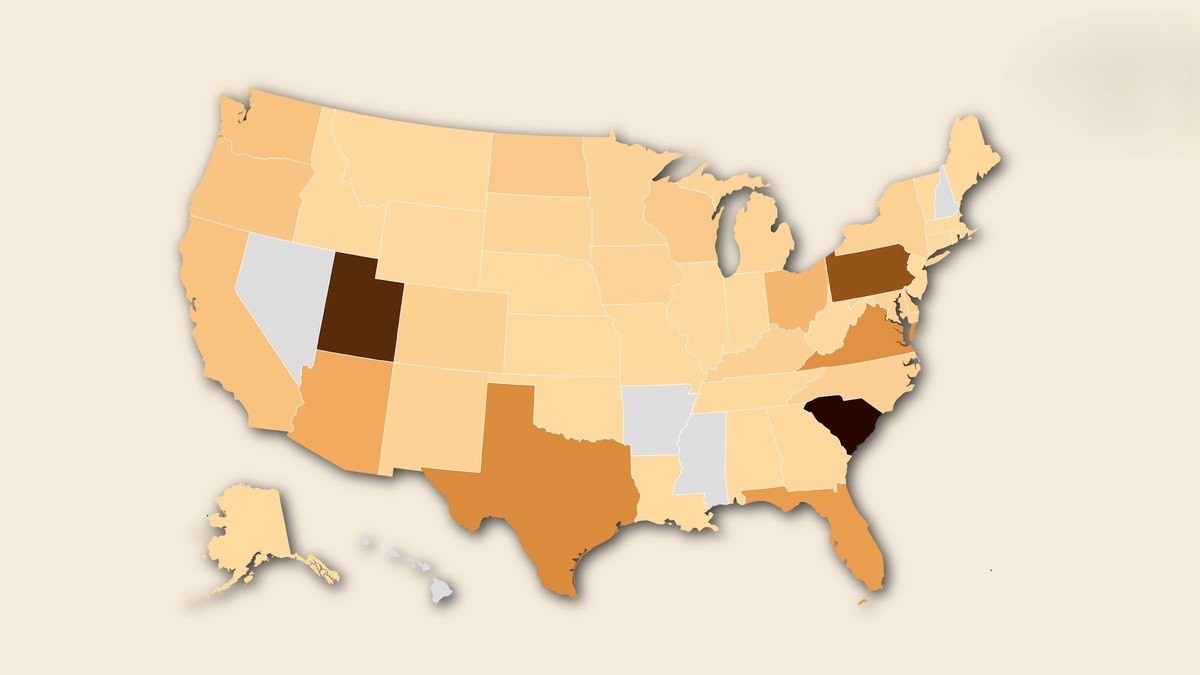
America’s worst measles year in decades has moved beyond 2,900 reported infections, while a dispute over two Pennsylvania deaths exposes how national totals can lag state investigations.
A preventable disease returns
Measles was declared eliminated from continuous U.S. transmission in 2000, but imported infections can still ignite outbreaks where vaccination coverage is low. The 2026 count is the highest since 1991, driven by several large clusters and smaller outbreaks across multiple states.
The Pennsylvania dispute
Pennsylvania classified two deaths as measles-associated after the patients tested positive or were epidemiologically linked to infection. The CDC’s national tracker had not included those deaths as of September 1. The difference reflects the distinction between an infection being present and a medical certifier naming it as the immediate cause of death.
Vaccination status is the clearest pattern
Most people infected in the current outbreak were unvaccinated or had an unknown vaccination history. Two doses of the MMR vaccine remain highly effective against measles, according to public-health guidance. Communities below the roughly 95 percent coverage level needed to prevent sustained spread are especially vulnerable.
What families should do
People who may have been exposed should call a clinic before arriving so staff can prevent additional transmission. Fever, cough, runny nose, red eyes and a spreading rash warrant prompt medical advice. Health departments are also urging families to review vaccination records before school and travel.
Why measles spreads so efficiently
Measles is among the world’s most contagious infections. Virus particles can remain in the air after an infected person leaves a room, and people can transmit the disease before the characteristic rash makes the diagnosis obvious.
That combination means a single case can generate a large contact investigation involving schools, clinics, aircraft or community events. Public-health teams must identify exposure windows quickly and determine who lacks immunity.
Understanding the national count
Case totals are assembled from state and local reports and can change as laboratories confirm infections or jurisdictions reconcile duplicates. Death classification takes longer because medical records, timing and other conditions must be reviewed.
The Pennsylvania disagreement illustrates why “measles-associated” and “caused by measles” are not always interchangeable in surveillance. Transparent definitions are important because both undercounting and overstating deaths can damage public trust.
The symptoms and timeline
Early illness often resembles other respiratory infections: fever, cough, runny nose and red eyes. Small white spots may appear inside the mouth, followed by a rash that usually begins near the hairline and spreads downward.
Symptoms generally begin one to three weeks after exposure. Anyone who suspects measles should call ahead before entering a waiting room, allowing a medical facility to arrange isolation and protect infants, pregnant patients and immunocompromised people.
Why community coverage matters
The MMR vaccine protects the person receiving it and reduces the number of paths the virus can use to reach people who cannot be vaccinated. Outbreak risk rises when exemptions and missed doses cluster in the same school or neighborhood.
A statewide average can therefore hide local vulnerability. A county with high overall coverage may still contain a school or social network below the level needed to interrupt transmission.
What two MMR doses mean
Public-health authorities recommend a two-dose schedule because the first dose does not produce immunity in everyone. The second dose closes much of that gap; it is not evidence that the first dose “wore off.”
During an outbreak or before international travel, clinicians may recommend an adjusted timetable for eligible children. Families should follow a medical professional or health department rather than improvising extra doses.
How the outbreak can end
Officials look for the passage of two full incubation periods without a new linked case before declaring an outbreak over. That makes the endpoint slower than the visible decline in weekly numbers.
Closing vaccination gaps, rapid testing, isolation and accurate contact tracing all shorten transmission chains. The national total will continue rising until the multiple local outbreaks feeding it are independently controlled.
Sources and verification
This report was prepared from current material available on September 2, 2026. Developing facts may change, and allegations are identified as allegations.
Editorial standard
Chitran Newsroom separates confirmed facts, contextual analysis and forward-looking interpretation. Corrections are made transparently when credible new evidence changes the record.